
PS Project Leader Resources
Resources for Developing Your Own Materials
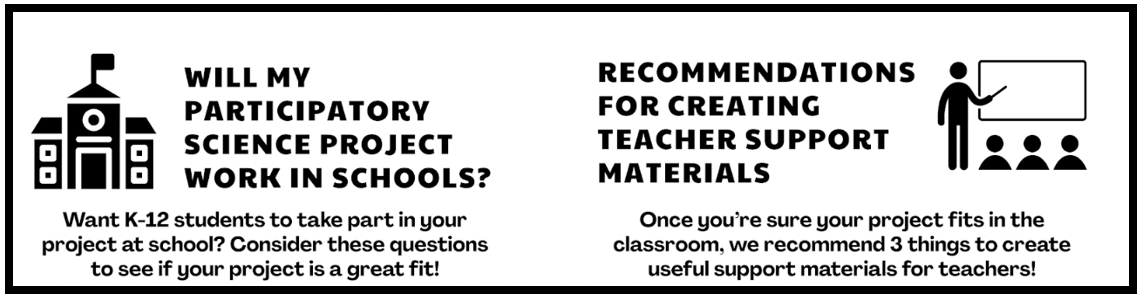
Using the best practices we identified through our work, we have created a brief workbook for project managers who wish to engage K-12 students in their participatory science projects. It consists of a series of questions that first ask you to assess how well your project fits into the K-12 classroom. It then highlights our three recommendations and asks you to consider how you can best meet those recommendations with your project.
The workbook is available in clickable form below or online here: https://ncmns.net/sbpsworkbook


Assessing Project Fit for K-12 Classrooms
Want to get your project into K-12 classrooms? The following list of questions will help you decide whether your project is a good fit!
Your Motivation: Why do you want students to do your project?
- Why do you want to get school-aged children involved in your participatory science project?
- What does success look like to you?
Feasibility: Can your project be done in a school setting?
1. What skills are required to participate in your project?
- Are these skills you’d expect K-12 students to have?
- If not, is it possible to provide the skills they need through support materials you develop?
2. What equipment is required to participate in your project?
- If equipment is required, how much does it cost?
- Can your project offer financial assistance to teachers who wish to bring your project into their classroom?
3. What sort of training is required for participation in your project?
- What resources do you have currently that can provide the necessary training?
- What resources do you still need to develop to provide the necessary training?
4. How much time is required to participate in your project?
Note that studies have shown that science often makes up less than 20 minutes of classroom time per day at the elementary level. It also takes time to prepare a class to go outdoors if that is required by the project as well as entering data into any apps or websites you use. We encourage you to consider the minimum and maximum amount of time it takes to participate!
- If participation requires more than 20-30 minutes of instructional time, can teachers split your activity across multiple class periods?
5. If outdoor data collection is required, is it possible for data collection to take place entirely on school grounds?
Note that many teachers are not allowed to take their students off campus without a huge amount of effort, so take that into consideration.
- Are there safety hazards (potential allergens, venomous animals, etc) that teachers will need to take into consideration while participating in your project with their class?
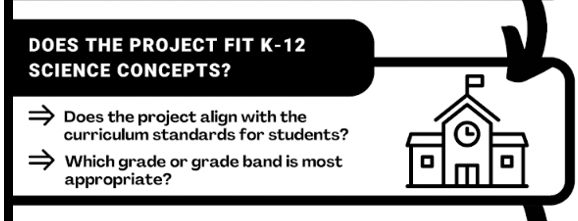
Standards Alignment: Is your project’s focus aligned with concepts addressed in K-12 curriculum standards?
- Do you wish for students to do your project in schools locally, nationally, or internationally?
- Which curriculum standards are used in your target areas? (e.g., NGSS is most commonly used in the US, but not all states have adopted them fully.)
- Which specific standards does your project best fit?
- Does your project match any non-science standards, such as math, literacy, or social studies?
- Based on the standards your project fits, which grade, grade band, or course does your project best match?
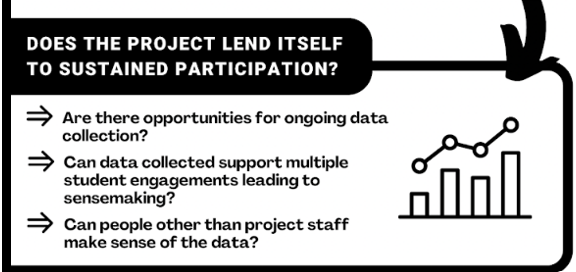
Level of Engagement: Does your project lend itself to extended engagement?
- Can students participate in your project during the typical school year in your target area?
- Can students participate in your project throughout the school year? i.e. can they participate across multiple months or can your project only be done one time?
- Can students collect data during typical school hours?
Data Access and Interpretation: Can students access and understand project data?
- Can students access data they have submitted to your project?
- Can students access data contributed by other project participants?
- How likely is it that students of your target grade level can interpret the data they harvest from your project?
Designing Participatory Science Support Materials for Use in K-12 Classrooms
Based on our research, we make the following recommendations for designing high-quality educative support materials for use by teachers in their classrooms. We believe that using this approach will help you develop high-quality support materials that teacher will be eager to put to use!
Recommendation 1: Design support materials that encourage sustained and purposeful project engagement.
We found that having a series of suggested (but not mandated) activities that built upon previous lessons and engaged students in sensemaking activities with their own data were the most effective. Consider the following:
- What ideas do you have about activities that teachers might do with their students in their classrooms? Activities might include how to collect and enter data, how to download and manipulate data from your project, encouraging interpretation and sensemaking by the students, etc.
- How might these activities build in complexity to address multiple educational standards and/or engage students in your project over multiple lessons?
- What sort of background knowledge could you provide to teachers to help them feel more comfortable engaging their students in your project?
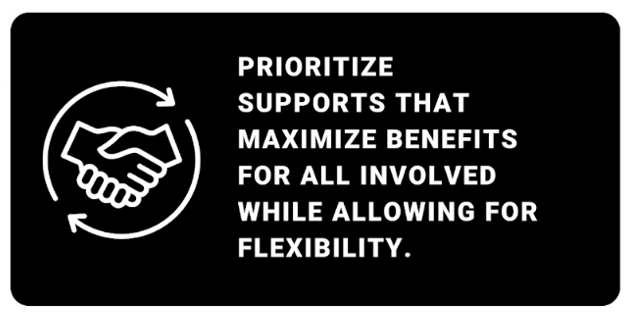
Recommendation 2: Prioritize supports that maximize benefits for all involved in the project while allowing for flexibility where possible.
Ideally, participation in your project by K-12 students will benefit both you as a scientist/project leader, the teacher, AND their students. We found that teachers used certain types of support materials more than others, so focusing on these will help ensure that you get the data you need while teachers can address their curriculum needs:
- Activity overview: a brief summary of what a suggested activity entails (this is often enough for experienced teachers to engage their students with your project)
- Activity narrative: a description of how a real or imagined teacher implemented your activity into their classroom
- Science content: background information and connections to curriculum that help teachers feel more confident that they can lead an activity and that it fits their required curriculum
1. What will your project team need to provide all three of these support types for teachers who wish to engage in your project?
Teachers face a lot of expectations about how and when they will teach certain concepts and in some cases there is no flexibility for them to make changes. As you develop curriculum materials, consider the following:

2. How can you help alleviate any of these pressures with support materials for your project?
Recommendation 3: Engage educators in the design.
Teachers are much more likely to trust resources supported by, created by, or tested by other teachers than they are resources made by non-teachers, so engaging teachers in your materials design is incredibly helpful. Consider the following:
1. How can you get the word out to teachers that you need help developing and/or testing materials? Are there listservs of educators you could tap into, science instruction specialists at the local or state level that can send the word out, websites you can use to share your resources, do you have a teacher friend, etc.?
2. What can you provide to encourage teachers to help with your materials design? (A stipend is always welcome, but you could offer to visit their school, provide all the equipment they require to participate in your project, invite their class to visit your lab or field site with you, etc.).